

Moving in British Columbia is very different from moving in many other parts of Canada. From heavy rain in Metro Vancouver to icy winter conditions in the Fraser Valley, weather plays a major role in how moves are planned, priced, and executed. Many homeowners and renters are surprised to learn that moving costs in BC can change significantly depending on the season and daily weather conditions.
At Richmond Moving Company, we’ve completed thousands of moves across Richmond, Vancouver, Burnaby, Delta, Surrey, and New Westminster in every type of weather imaginable. In this guide, we’ll explain how weather impacts moving costs in British Columbia, what seasonal price changes to expect, and how you can reduce weather-related expenses while planning your move.
Why Weather Affects Moving Costs in British Columbia
British Columbia’s climate is unique. Coastal rain, mountain snow, summer heatwaves, and sudden storms all create challenges that directly affect moving timelines, labour requirements, and safety precautions.
Here’s how weather influences moving prices in BC:
-
Increased labour time due to slower loading and unloading
-
Additional safety equipment and protective materials
-
Higher risk of delays or rescheduling
-
Greater demand during certain seasons
Professional movers must plan carefully to protect belongings, properties, and crew members—especially during extreme weather conditions.
Moving Costs During Rainy Season in British Columbia
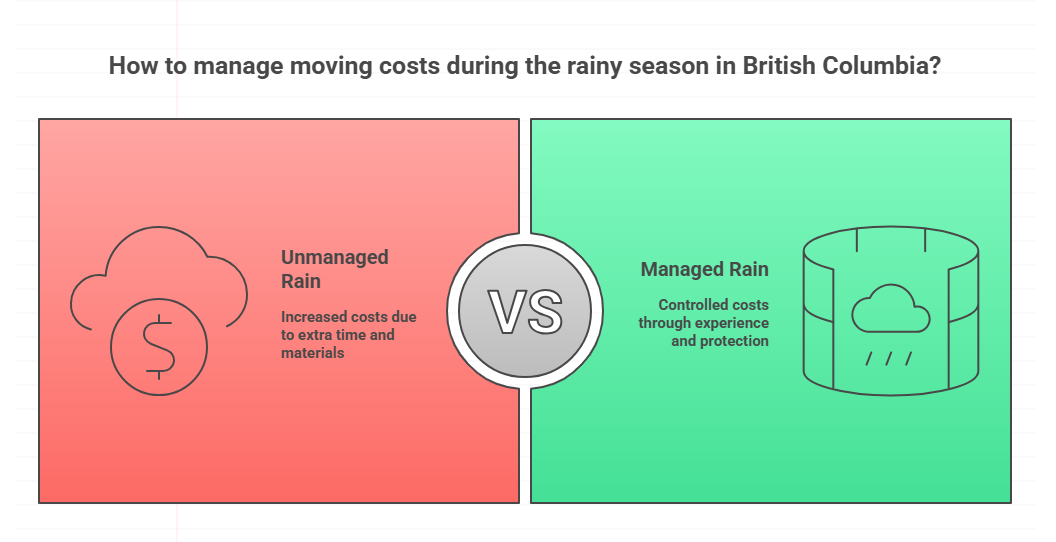
Rain is one of the most common weather factors affecting moves in BC, particularly in Richmond and Vancouver. While rain doesn’t stop a move, it can increase costs if not managed properly.
How Rain Impacts Your Move
Rainy conditions often require:
-
Extra floor runners and protective coverings
-
Waterproof wrapping for furniture and mattresses
-
Slower loading to prevent slips and damage
This added time can increase hourly labour costs, especially for larger homes or apartment moves.
Pro Tip from Local Movers
Our crews regularly handle rainy-day moves across local moving services in Richmond and surrounding cities. Experienced movers know how to work efficiently in wet conditions without compromising safety or property protection.
Winter Moving Costs in British Columbia
Winter moving costs in British Columbia tend to rise, especially when snow or ice is involved. While coastal areas like Richmond experience milder winters, nearby regions may face freezing rain or snowfall.
Why Winter Moves Cost More
-
Slower truck loading due to icy walkways
-
Extra manpower for safety and balance
-
Potential equipment upgrades like traction mats
Winter moves also carry a higher risk of delays, which can affect availability and scheduling.
Is Winter Still a Good Time to Move?
Yes—if planned properly. Many clients benefit from better availability and flexible scheduling during winter, especially for long-distance movers in Richmond.
Summer Moving Rates in British Columbia
Summer is the busiest moving season in BC. From June to September, demand peaks due to school breaks, lease turnovers, and better weather.
Why Summer Moves Are More Expensive
-
High demand for movers across Metro Vancouver
-
Limited availability during weekends and month-ends
-
Increased fuel and operational costs
Summer rates are typically higher, especially for popular services like house moving services in Richmond and Burnaby.
Best Weather for Moving in British Columbia
The ideal time to move in BC is often during spring and fall when temperatures are mild and demand is lower.
Benefits of Spring and Fall Moves
-
More flexible scheduling
-
Moderate pricing compared to summer
-
Safer conditions than winter
If you’re flexible with dates, this is often the best way to balance cost and convenience.
Seasonal Moving Cost Comparison in BC
| Season | Average Cost Impact | Key Challenges |
|---|---|---|
| Winter | Medium | Snow, ice, safety risks |
| Spring | Low–Medium | Rain, unpredictable weather |
| Summer | High | Peak demand, limited availability |
| Fall | Low–Medium | Shorter daylight hours |
How Weather Affects Moving Timelines
Weather doesn’t just affect price—it impacts how long your move takes. Rain, snow, or extreme heat can slow down crews and require extra precautions. This is especially important for:
-
Apartment moves in Burnaby
-
Office relocations in Surrey
-
Piano movers in Richmond
Professional movers plan buffer time into weather-sensitive moves to ensure everything arrives safely.
Additional Weather-Related Moving Costs to Expect
Certain services may be added during challenging weather conditions:
-
Protective shrink wrapping and padding
-
Temporary storage solutions
-
Equipment upgrades for heavy or specialty items
These costs are always explained upfront by reputable movers.
How to Reduce Weather-Related Moving Costs in BC
You can minimize weather-related expenses by planning smartly:
-
Book mid-week moves instead of weekends
-
Avoid end-of-month peak dates
-
Clear walkways and entrances before movers arrive
Working with experienced professionals like Richmond Moving Company ensures fewer surprises and transparent pricing.
Frequently Asked Questions
Does rain increase moving costs in BC?
Rain can increase costs slightly due to added labour time and protective materials, especially for larger moves.
Are winter moves cheaper in British Columbia?
Sometimes. While safety measures may add cost, lower demand often leads to better availability and flexible pricing.
What is the most expensive time to move in BC?
Summer is typically the most expensive season due to high demand and limited mover availability.
Can movers still work during bad weather?
Yes. Professional movers are trained to handle rain, snow, and cold safely with the right equipment.
How do I avoid weather-related delays?
Book experienced movers early and allow flexible time windows during unpredictable seasons.
